
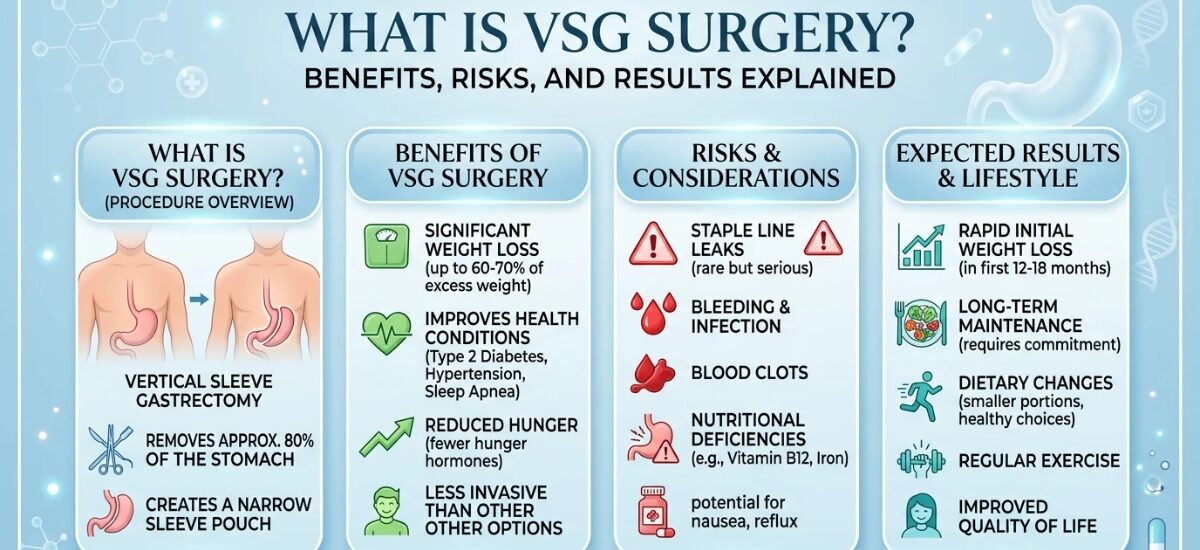
What Is VSG Surgery? Benefits, Risks, and Results Explained
Vertical Sleeve Gastrectomy (VSG) has become one of the most trusted weight loss surgery options in most of the world. Many people choose this bariatric surgery procedure when diet and exercise fail. It offers real change. It reshapes eating habits and supports long-term health improvement.
This Article explains everything in simple words. You will understand how VSG weight loss surgery works, who needs it, and what life looks like after it. If you are exploring surgical weight loss methods, this article gives clear and practical insight.
Table of Contents
What Is Vertical Sleeve Gastrectomy (VSG)?
VSG: The Vertical Sleeve Gastrectomy or VSG is one of the most common gastric sleeve surgeries that shrinks the stomach. A partial surgical removal of stomach portion is performed, leaving it in a tube shape. This involves the reduction of your stomach, limiting food intake, and helping you to control your appetite post-surgery as well.
It is a reversible weight loss method that preserves the integrity of your digestive system (unlike other forms of weight loss surgery). It targets the size of the stomach as well as controlling the hunger-causing hormone ghrelin in order to reduce hunger pangs.
This advanced efficacy in weight loss coupled with a simplified recovery from obesity treatment surgery is perceived to have led many patients opting for this procedure.
How Does VSG Surgery Help With Weight Loss?
This VSG weight loss surgery works by reducing hunger and limiting portion sizes. A smaller stomach means you feel full faster. At the same time, reduced appetite hormone levels improve appetite control after surgery, making it easier to follow healthy habits.
Patients often see a strong excess weight loss percentage over time. Studies show about 50 to 60 percent excess weight loss within a year. The weight loss timeline after VSG supports sustainable weight loss, especially when paired with lifestyle changes and improved daily routines.
Who Is an Ideal Candidate for VSG Surgery?
The Vertical Sleeve Gastrectomy (VSG) is a surgical procedure most commonly performed on patients who have BMI 40 or greater, but can occur in some cases even when the patient has a lower BMI. It can also be suitable for people suffering from obesity-related diseases, such as type 2 diabetes, heart disease obesity or high blood pressure obesity.
The long term weight loss surgical procedure additionally benefits those that need to treat sleep apnea. However, success depends on commitment. Before going for sleeve, the patients should agree lifestyle adjustments post surgery, knowing about sleeve gastrectomy benefits and VSG risks and complications.
Preparing for Vertical Sleeve Gastrectomy
Preparation plays a major role in success. Patients follow a pre-surgery diet plan and often need to quit smoking before surgery. Doctors also advise patients to stop blood thinners before surgery to reduce risks.
Mental readiness matters just as much. A psychological evaluation before surgery ensures emotional stability. Alongside this, nutritional counseling bariatric helps patients understand food habits. These steps prepare the body and mind for lasting results after bariatric surgery recovery.
How the VSG Procedure Works (Step-by-Step)
During Vertical Sleeve Gastrectomy (VSG), surgeons use a laparoscopic technique to remove about 80 percent of the stomach. This minimally invasive procedure creates a sleeve-shaped stomach that limits food intake and supports weight loss.
Quick Procedure Overview
| Step | Description |
|---|---|
| Step 1 | Small incisions are made |
| Step 2 | Camera inserted using laparoscopic sleeve gastrectomy tools |
| Step 3 | Large portion of stomach removed |
| Step 4 | New stomach sleeve formed |
This minimally invasive weight loss surgery usually takes two hours. It offers faster healing and fewer scars compared to open surgery.
Is VSG a Minimally Invasive Surgery?
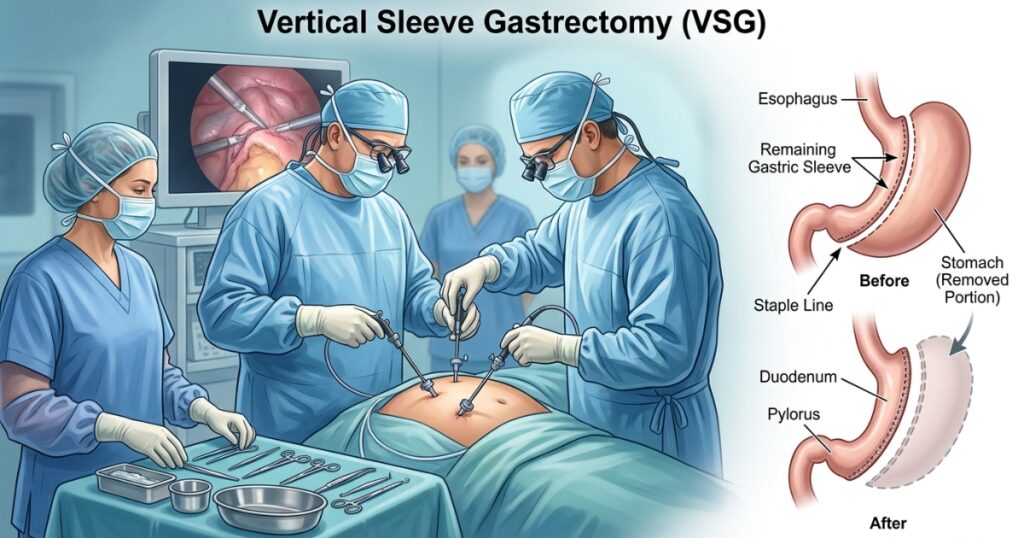
Vertical Sleeve Gastrectomy (VSG) is a successful, minimally invasive weight loss surgery. Technically, surgeons perform the procedure using instruments through small cuts laparoscopically.
This reduces hospitalization and increases comfort. The results of scholarly medicine shorter recovery time in Bariatric Surgery Gastric sleeve vs gastric bypass overall, VSG has a relatively simple procedure, fewer complications and most patients resume normal activities sooner than after GB.
Life After VSG Surgery – Recovery, Diet & Results
Life changes quickly after Vertical Sleeve Gastrectomy (VSG). Patients start with a post-surgery liquid diet, then slowly move through bariatric diet stages. Following the recovery timeline VSG is important for healing and success.
Recovery Diet Progression
| Stage | Food Type |
|---|---|
| Week 1 | Liquids only |
| Week 2–3 | Pureed foods |
| Week 4+ | Soft foods |
| Later | Regular small meals |
Patients must manage vitamin deficiency after surgery using calcium vitamin D B12 supplements. Over time, they achieve improved metabolic health and maintain long-term weight management.
Risks, Benefits, and Long-Term Outlook of Vertical Sleeve Gastrectomy (VSG)
Like any bariatric surgery procedure, VSG has pros and cons. The sleeve gastrectomy benefits include strong weight loss and better health. However, VSG risks and complications like GERD after sleeve gastrectomy or nutrient absorption issues can occur.
Benefits vs Risks Table
| Benefits | Risks |
|---|---|
| Sustainable weight loss | surgical risks bleeding infection |
| Better health conditions | gastric sleeve dilation |
| Improved lifestyle | complications of bariatric surgery |
Understanding both sides helps patients make informed decisions.
FAQs
Many patients ask simple questions before choosing Vertical Sleeve Gastrectomy (VSG). They want clarity about safety, recovery, and results. The VSG success rate is high when patients follow medical advice and maintain discipline.
Common concerns include recovery time and long-term results. Most patients return to normal life within weeks. When done correctly, this obesity treatment surgery offers life-changing outcomes and better overall health.
About the Author:
Dr. Jason is a health content writer who knows a lot about researching Fitness, Nutrition, and Medical related topics. He focuses on giving clear, correct, and research-based information from reliable trusted sources.
